HB 340: Utah's plug-in solar law explained
Utah HB 340 (2025) made plug-in solar under 1,200W permit-free, utility-approval-free, and interconnection-agreement-free. What's legal, what's not.
Last updated 2026-04-27
TL;DR: Utah HB 340 was signed by Governor Cox on March 25, 2025 and took effect May 7, 2025. It legalized plug-in solar systems up to 1,200W AC with no permits, no utility approval, and no interconnection agreement. Utah is the first US state to pass legislation specifically for plug-in solar.
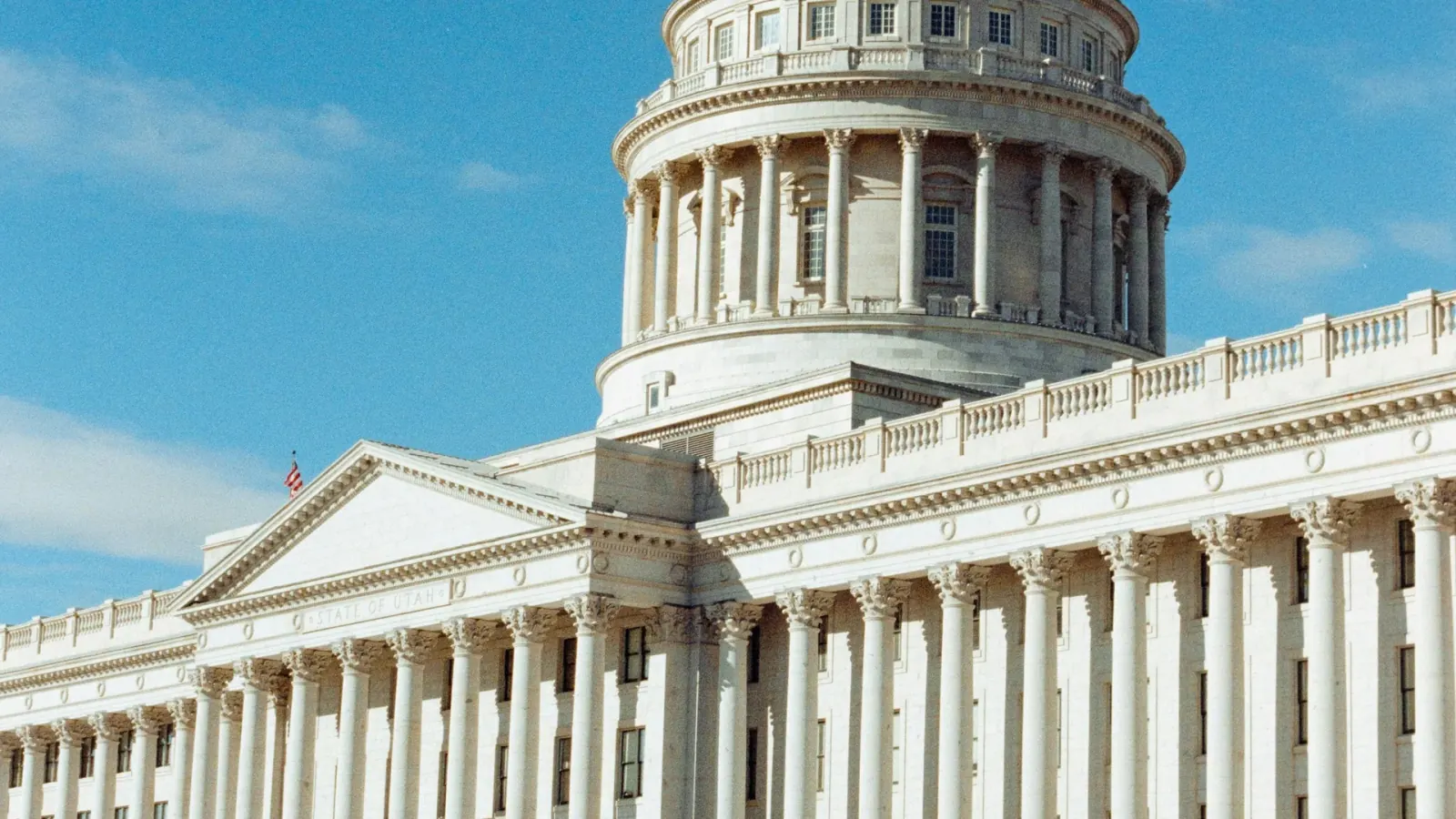
What HB 340 actually changed
Before HB 340, putting any solar on your house in Utah meant a stack of paperwork. Building permits. Electrical permits. An interconnection agreement with Rocky Mountain Power. Engineer-stamped diagrams over 10 kW. A months-long timeline before you could turn the system on.
HB 340 created a new legal category — a “portable solar generation device”, that lives entirely outside that process. If your system meets the requirements, you don’t ask permission. You plug it in.
The bill passed unanimously: House 72–0, Senate 27–0. Sponsored by Rep. Raymond Ward (R) and Sen. Wayne Harper (R), it had no fiscal impact, no organized opposition, and went into effect about six weeks after signing.
What qualifies as “plug-in solar” under HB 340
To be exempt from permits and interconnection, a system must meet all of these:
- AC output of 1,200 watts or less — measured at the inverter, not the panels. You can have more panel wattage on the DC side; the cap is on what gets pushed into your home.
- Plugs into a standard 120V AC outlet — no hardwired connections.
- UL-certified (or equivalent nationally recognized testing laboratory) — covering the inverter and the safety standards it’s tested against, including UL 1741 anti-islanding.
- Compliant with the most recent National Electrical Code — Utah is on NEC 2023 (NFPA 70-2023) since July 2023.
- Anti-islanding protection — the inverter must shut off automatically when grid power is lost, so it can’t energize a downed line during an outage.
A system that meets all five is exempt. A system that exceeds 1,200W AC, or hardwires into your panel, falls back into the standard interconnection process.
What you don’t have to do
- No building permit
- No electrical permit
- No interconnection agreement with Rocky Mountain Power
- No utility approval
- No interconnection or application fees
- No engineer-stamped drawings
- No formal notification to the state or your city
Rocky Mountain Power is also legally shielded from liability for damage caused by HB 340 devices. That’s part of why the bill sailed through: it gives homeowners a path forward without putting risk on the utility.
What you give up
HB 340 is a tradeoff, and the tradeoff is real:
- No net metering credit. The bill is offset-only. Power your kit produces while you’re using it lowers your bill. Power that flows past your meter to the grid is uncompensated.
- 1,200W AC is a hard ceiling. Want a bigger system? You’re back in standard interconnection territory — permits, RMP application, the works.
- Residential only. Commercial properties aren’t included.
- A bidirectional smart meter is still strongly recommended. Without one, exported power can register as consumption and inflate your bill. RMP will install one for free, see our RMP onboarding guide.
Why this is a big deal
Plug-in solar — sometimes called “balcony solar”, has been mainstream in Germany for over a decade. Over a million systems are installed there. The hardware exists. The safety standards are mature. The economics work.
What was missing in the US was a legal path. Every state’s interconnection rules were written for utility-scale rooftop installs, and small plug-in systems fell through the cracks: technically illegal, practically unenforced, but a real barrier for anyone who wanted to do it correctly.
Utah is the first state to write the path. Bills modeled on HB 340 have since been introduced in Vermont, Rhode Island, and others. For now, if you live in Utah, you have a window where the technology, the legality, and the economics line up — and most of the rest of the country doesn’t.